Writing Rank-Winning Copy for Modern Search

Search and content are no longer different lanes. In 2026, they act like a single system where exposure is split throughout classic rankings, AI-generated answers, video platforms, and community-driven outcomes. The practical outcome is basic: teams that treat material as an owned trustworthiness property will keep earning demand, even as clicks piece.
Develop a light-weight material QA list: accurate checks, primary-source links, author proficiency signals, and "what is new here" recognition. In 2026, "good writing" is table stakes. Brand names need noticeable evidence behind the material.
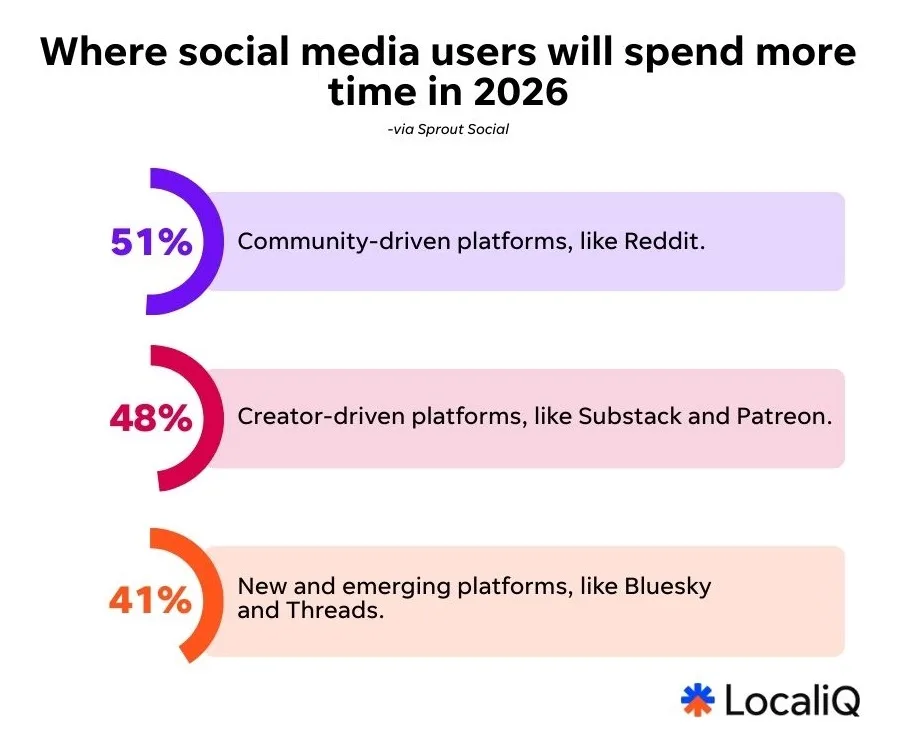
Boosting Organic Reach and Social Media Integration
Make third-party discusses through podcasts, partnerships, and digital PR. It is discoverability facilities. Even when traffic holds, attribution gets messier.
Track "exposure outcomes," not simply clicks: branded search development, demonstration helps, newsletter signups, and sales conversations influenced by material. Include an internal "citation and mention" report. View which pages get referenced externally, which topics reveal up in AI responses, and which possessions make links. Volume alone is not a moat any longer.
Siege Media reports the top aggravations in 2025 were getting material to rank (77.6%) and conference user intent (70.6%). highlights "micro-intents" and the requirement to ask, for each page, what the user desires to do today, then build clusters that match that truth. Redesign material preparing around jobs-to-be-done.
Leveraging Modern Analytics for Optimized Search Strategy
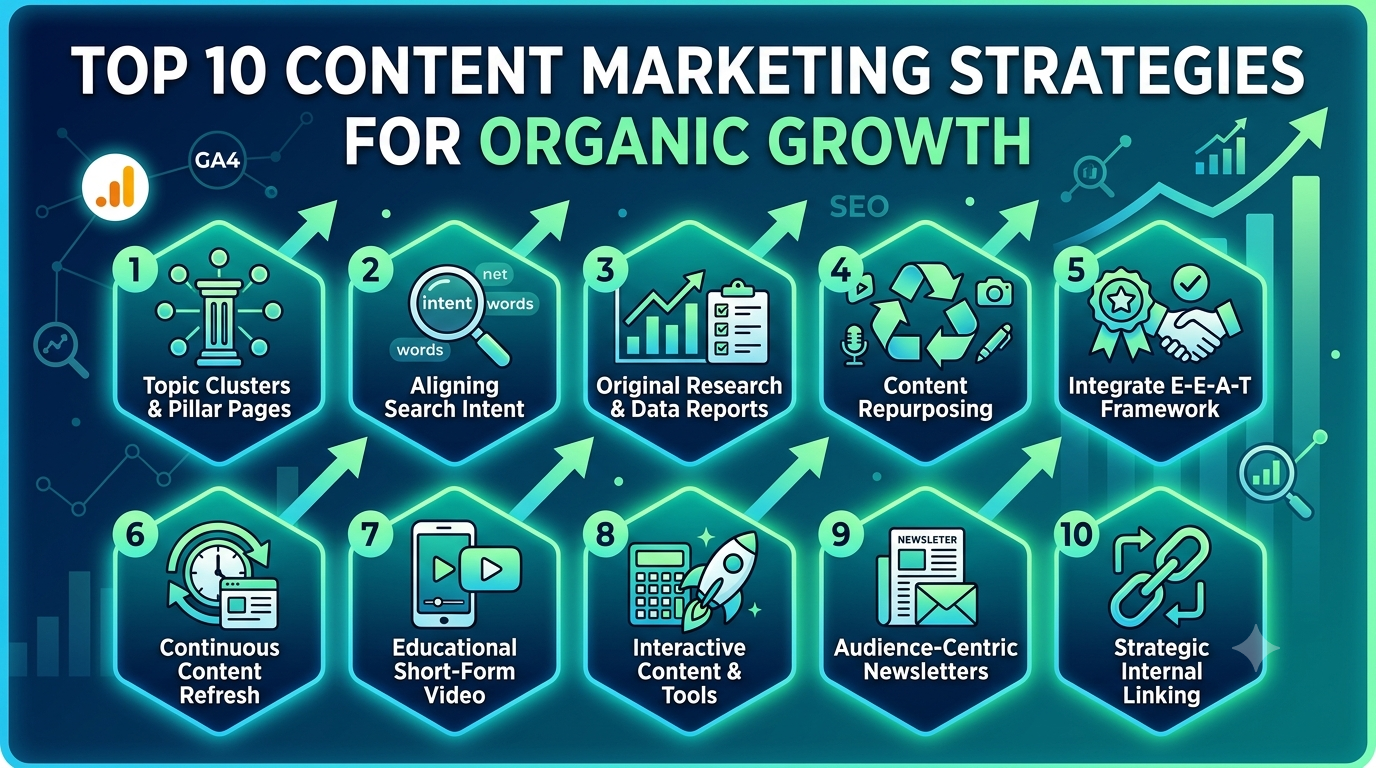
Usage topic clusters that connect: a core page, supporting pages, and evidence properties that can be referenced and connected. Purchasing topical mapping and material architecture in advance makes every subsequent property more effective. Prune or merge content that is generic, redundant, or thin. Replace it with fewer pages that carry real compound.
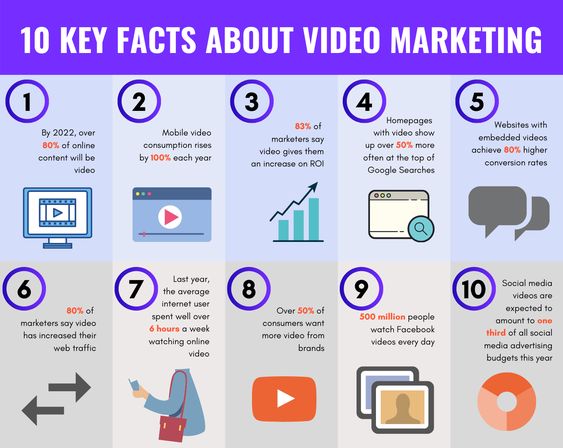
what makes good contentHubSpot reports that in 2025, blog posts (38%) were the 3rd most utilized content format amongst online marketers, and blog posts were also among the leading five highest-ROI formats. HubSpot also notes blog sites are amongst the formats online marketers plan to buy for 2026, together with video-heavy formats and UGC. lists "leveraging multimedia" as a 2026 SEO trend and argues text-only pages are significantly limiting.
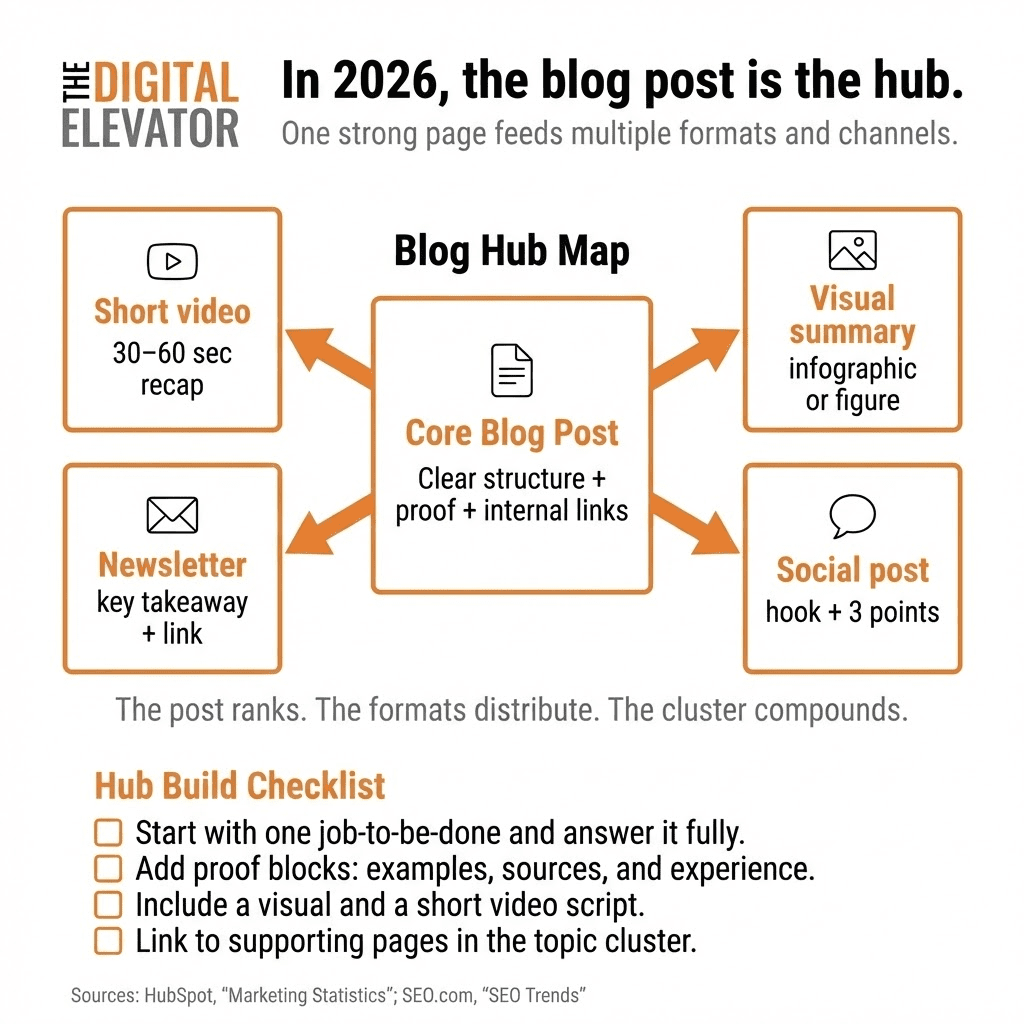
Repurpose intentionally. One strong post can end up being a LinkedIn thread, a brief video, a webinar outline, and a downloadable checklist. A helpful method to consider 2026 is that you are constructing a network of trust signals, not just releasing pages. Content Marketing Institute's specialist roundup advises building "trust communities," with interviews, behind-the-scenes stories, and specialist insights to stand apart in an AI-saturated environment.
Release material that shows gain access to and experience: practitioner interviews, field notes, teardown analyses, and operator playbooks. Link these assets together. The objective is a connected body of work that is simple for humans and systems to trust.

Effective Content Lifecycle Optimization Tactics
Make ROI much easier to defend by constructing content around high-intent issues, not broad informational topics alone. If you need a tidy operating design, use this as your standard: Pick 35 reliability styles you desire to own (not 30). Construct clusters around micro-intents, then release one "flagship" property per cluster. Include proof: author proficiency, main sources, case examples, and third-party points out.
It is that SEO results are now produced by a more comprehensive credibility economy. AI compresses the space for generic content, while raising the reward for material with proof, voice, and connected distribution.